Colors
Five colors, five places
Every R2 paint is named for a place. Next, each color gets a job.
Learn what a color means once.
On glass, paint, cloth or print, a role is a promise.
Accent
Energy
Navigation
Alert

Thirteen steps, one screen
Typography
Anatomy of a letterform
Cap height, median, baseline: three lines every type role is measured against.
Tokenization
Here’s how the promise is kept.
A name says its tier before its color, and nothing reads a raw hex.
Fill
- #FFAC00 Day and Night
- Primitive
Color/Yellow/ 400 - Semantic
Semantic/Accent - Component
Button/Action/ Accent/ Enabled - KeySearch
Label
- #000000 Day and Night
- Primitive
Color/Rivian/ Black - Semantic
Semantic/Always Dark - ComponentNone: binds at Semantic
Anatomy
Every part answers with its value and the node it was read from.
Now make it hold on a second platform.
Bento M · 712 × 808
Seven parts, one source node — every number retrieved, none remembered.
Two platforms, one framework
CD Framework · MSP · 2396 × 1120
Each part answers with the numbers and tokens that place it.
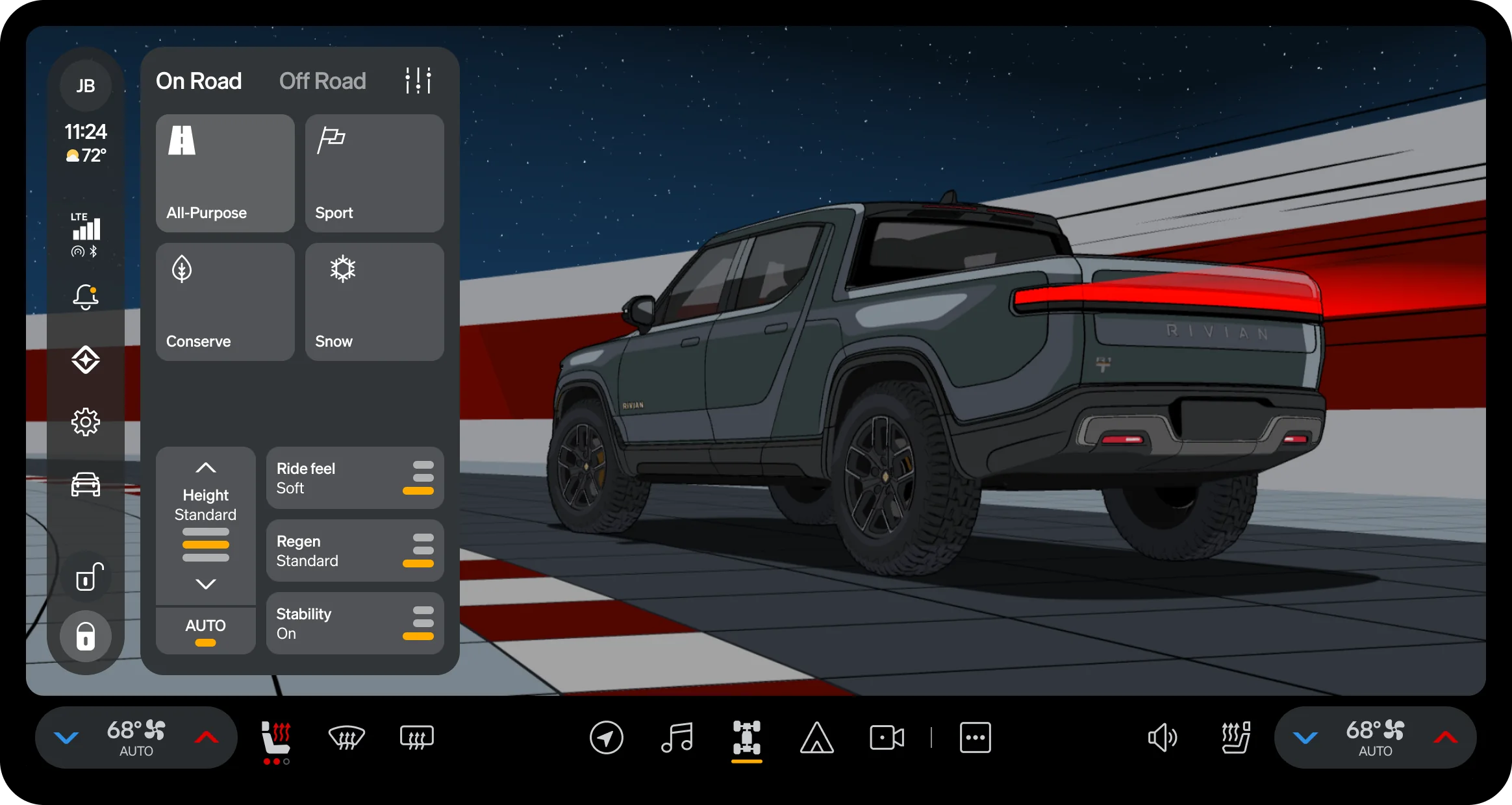
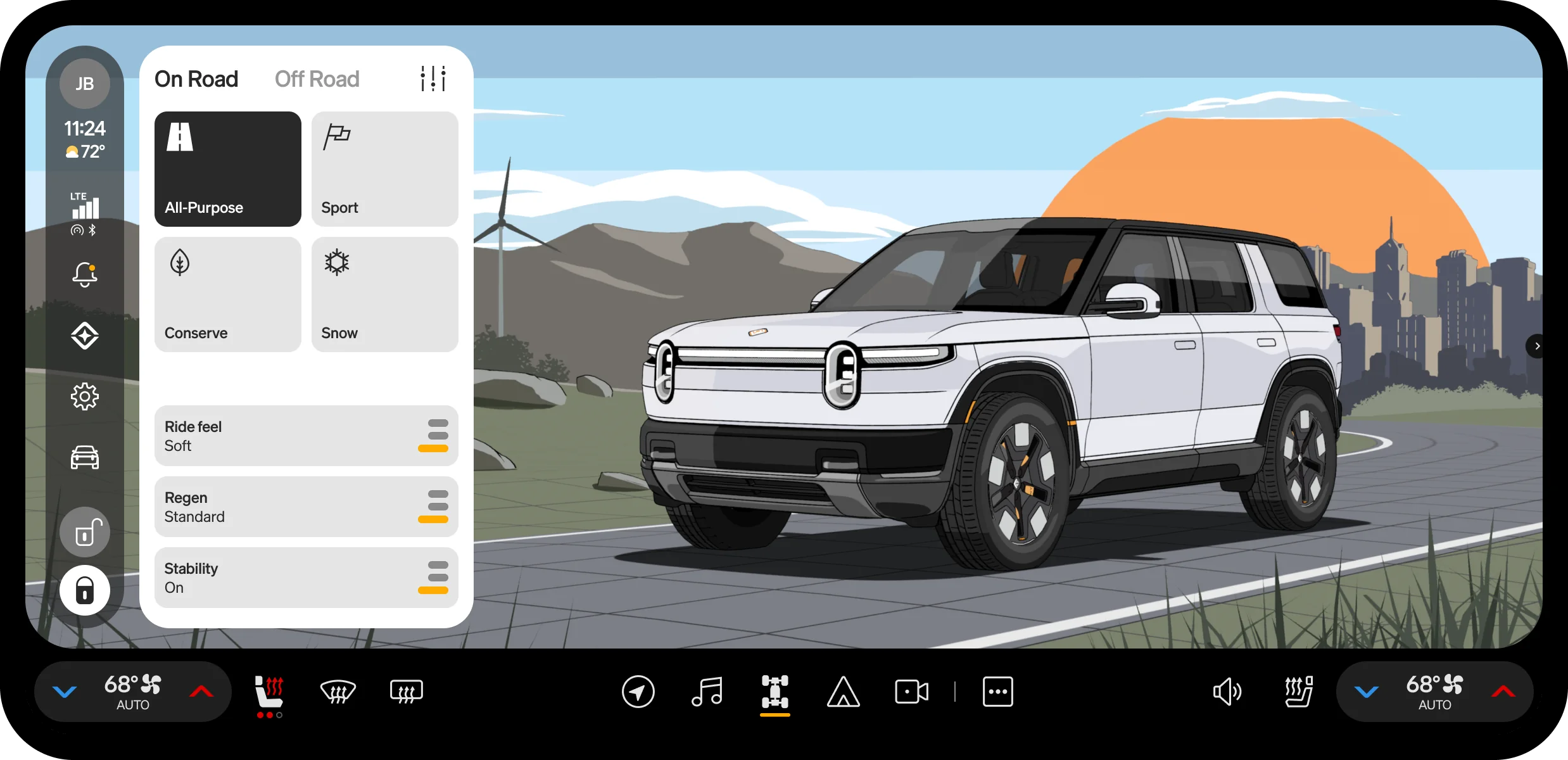
Accessibility
Three zones, one arm’s length
The center display, zoned by how far the driver has to reach.
A cognitive button system designed for safety.
ActionPill
Toggle offStroked
Toggle onInverse
Cues1
Assembled
MSP Driver Display
MSP Center Display
Theming
One update, five surfaces

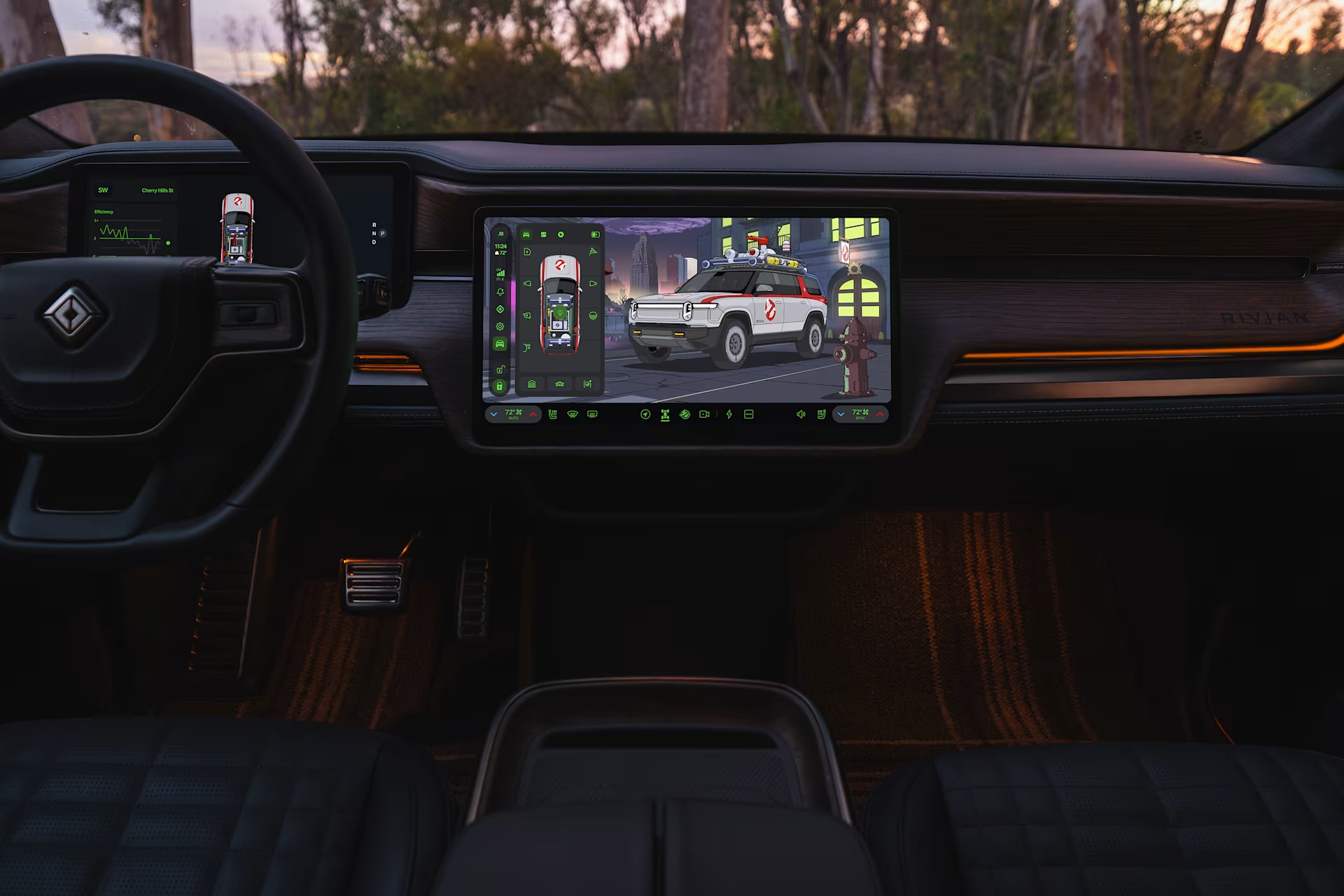
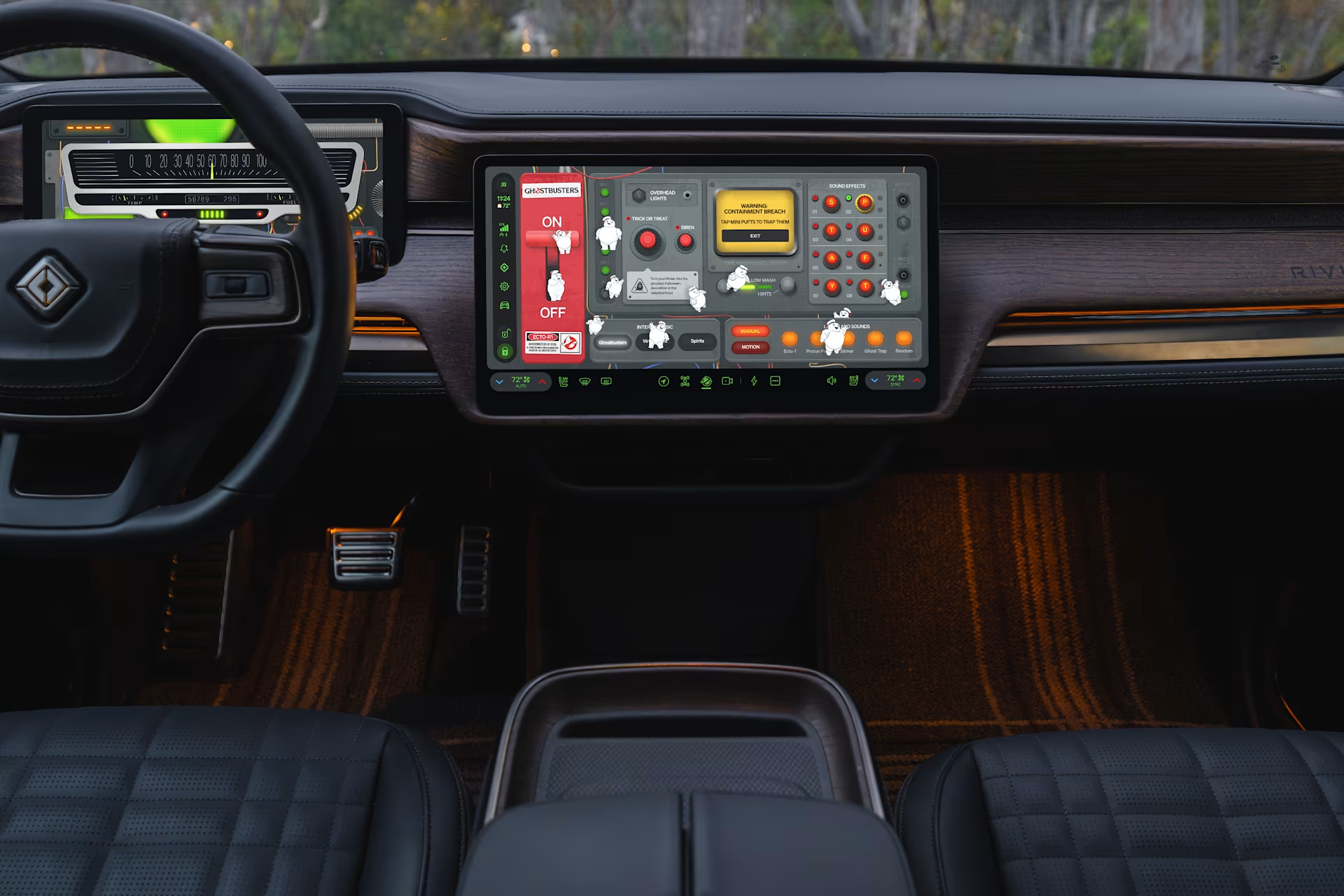
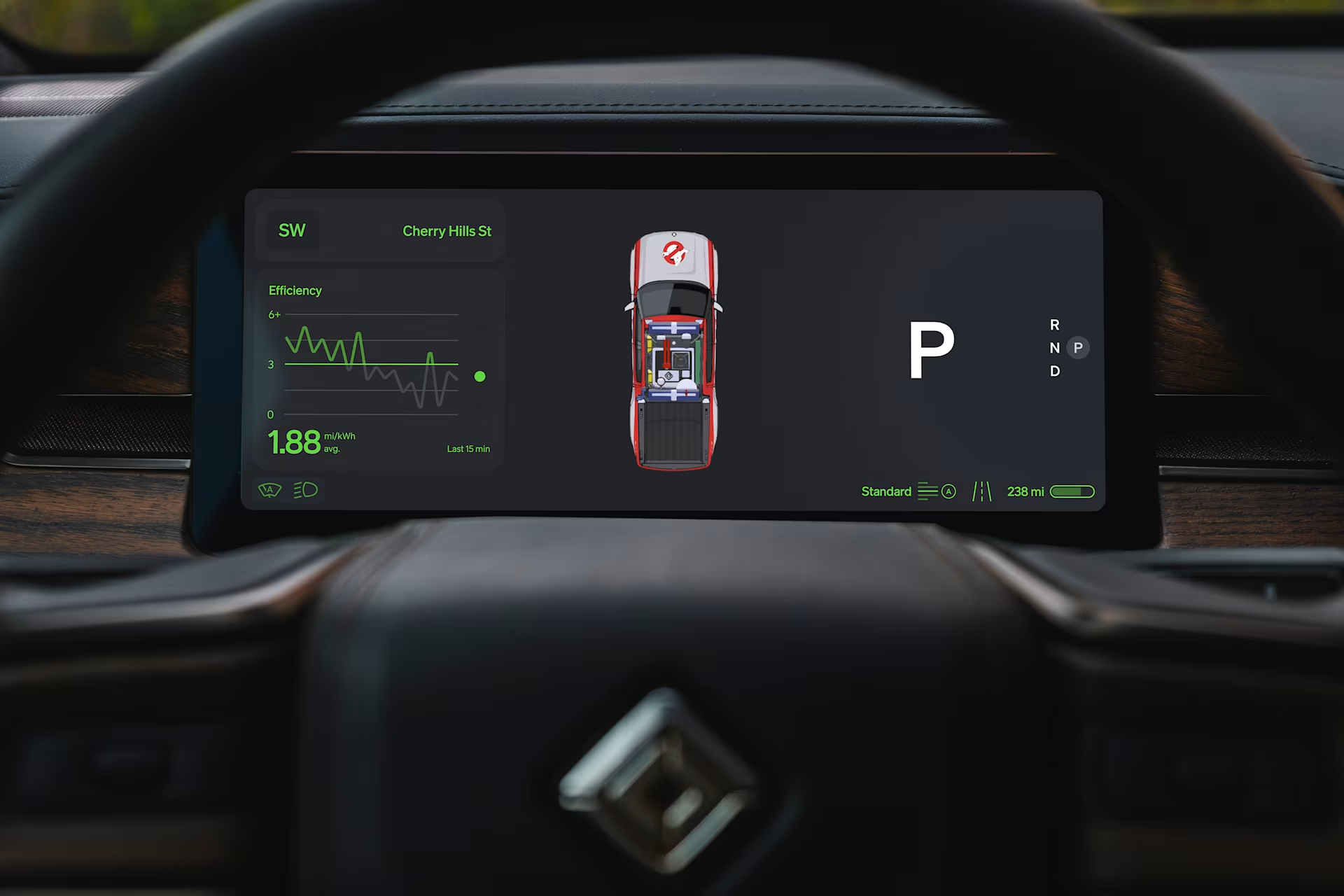
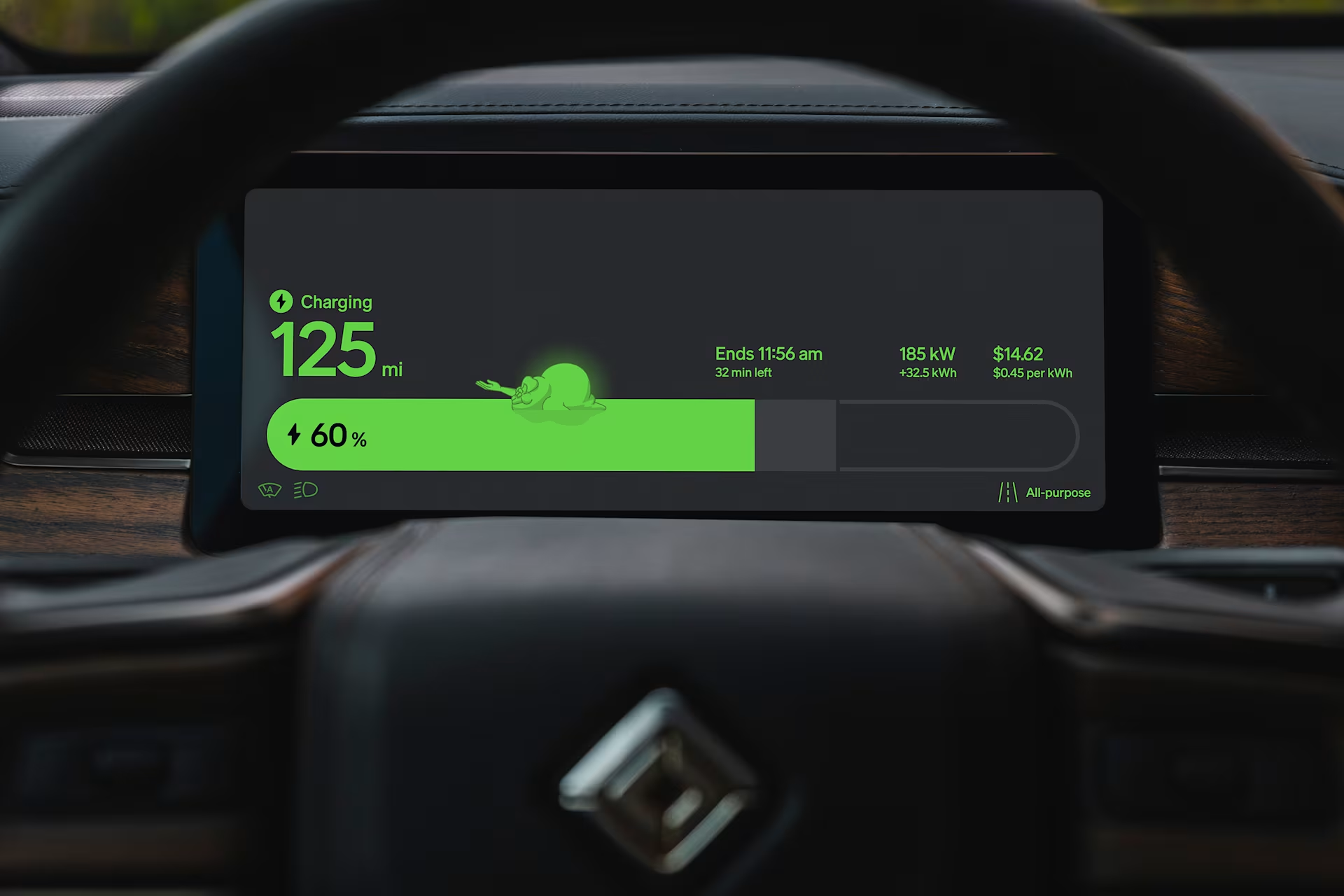
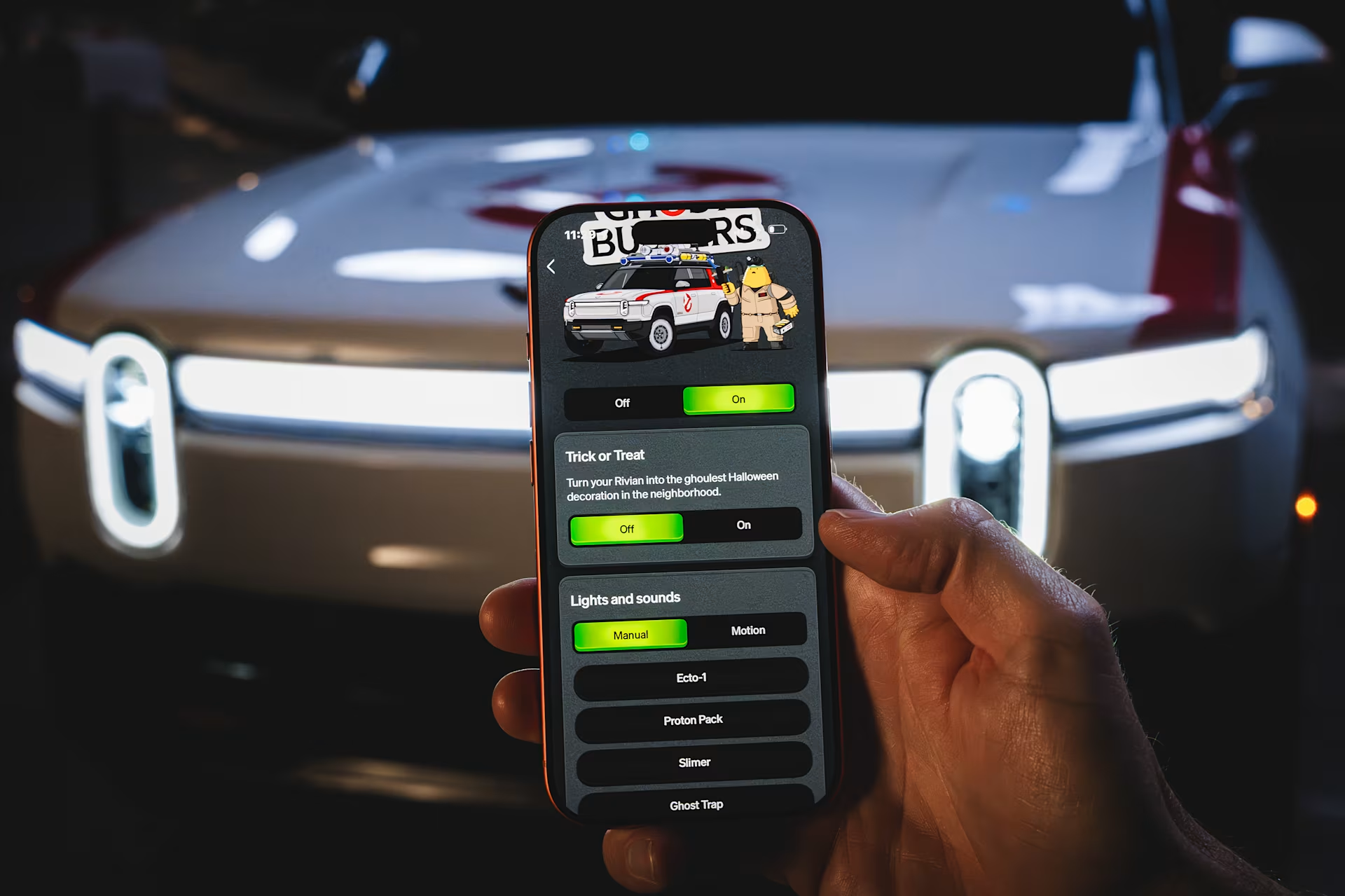
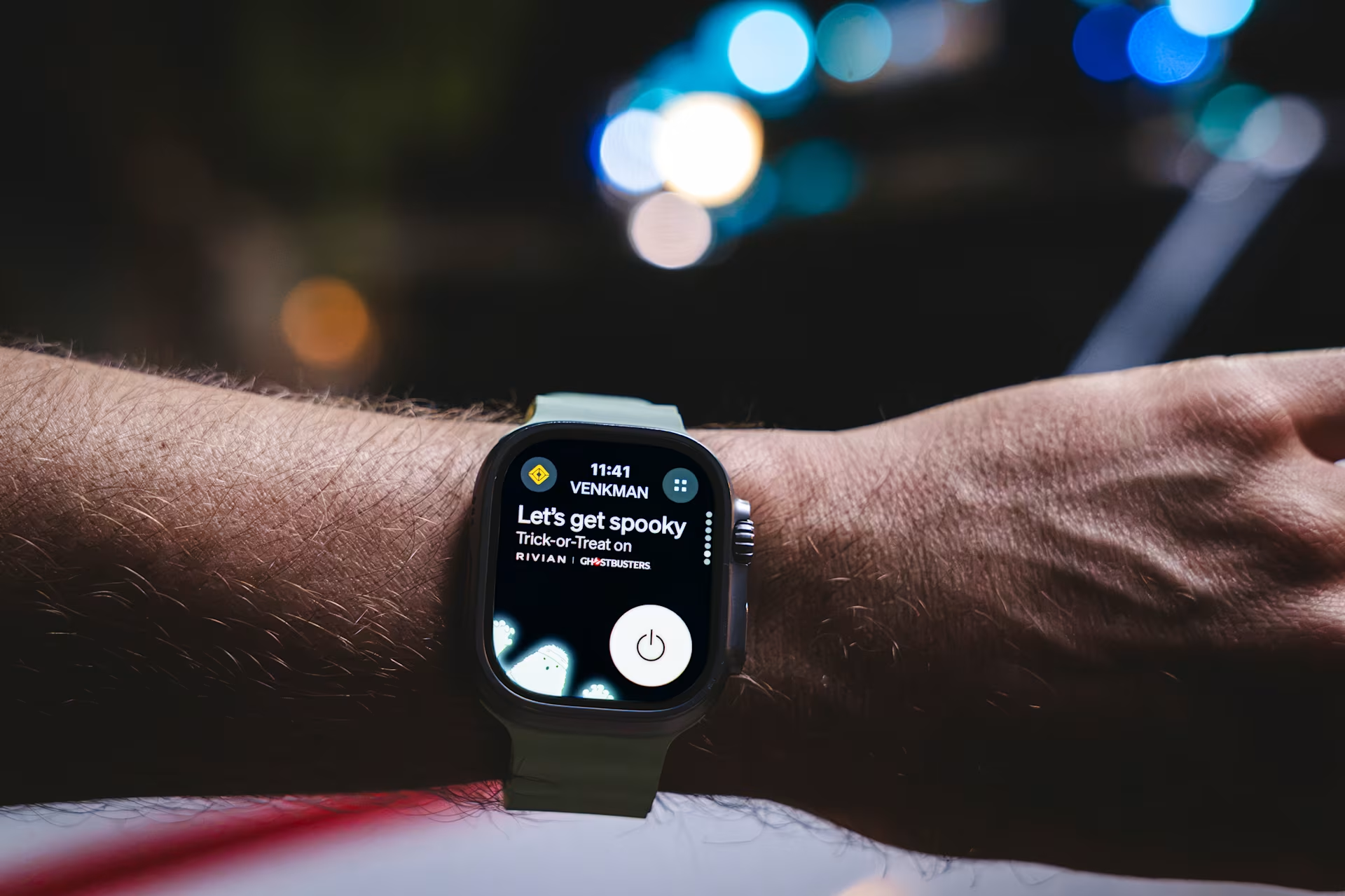
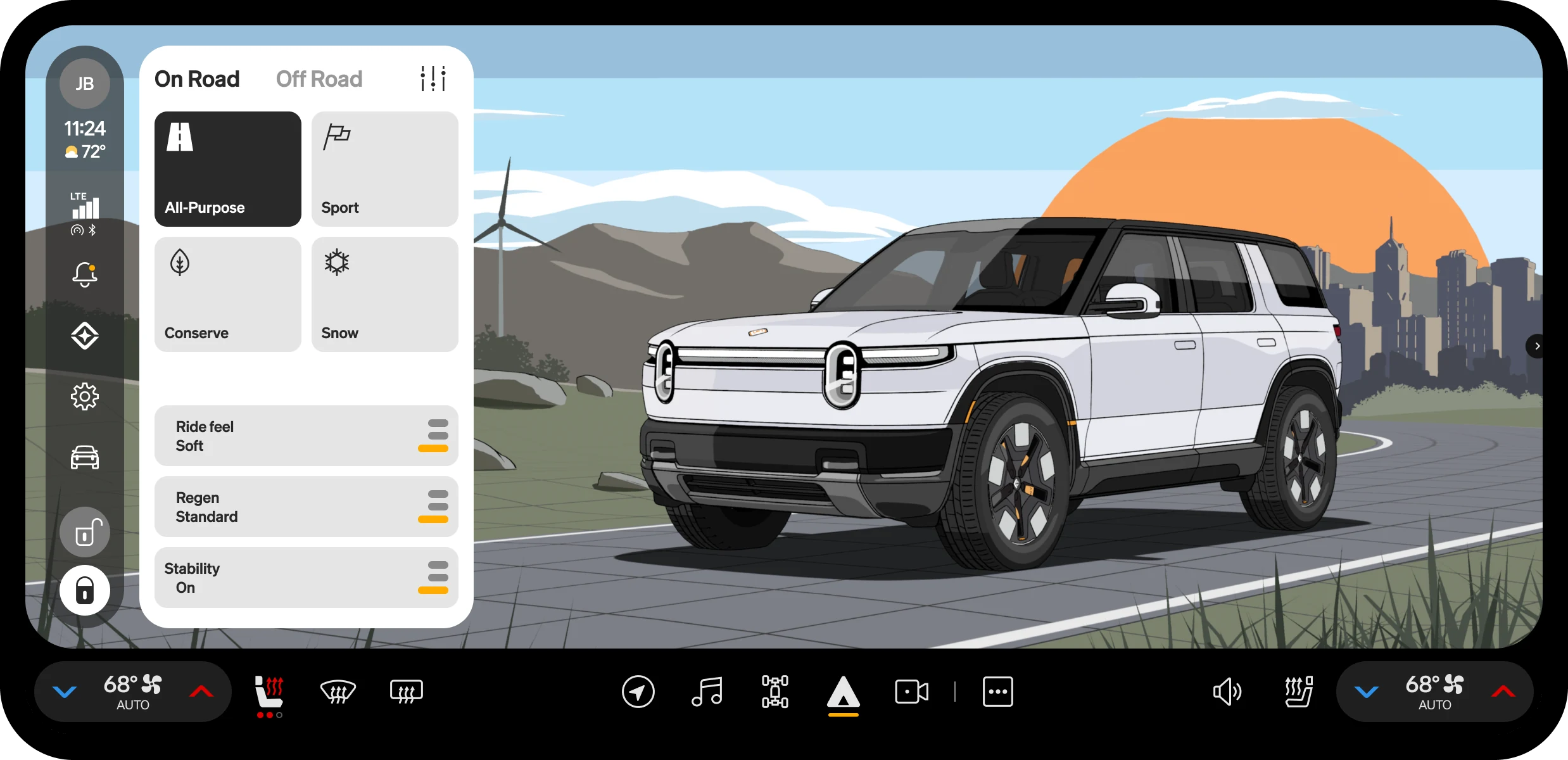
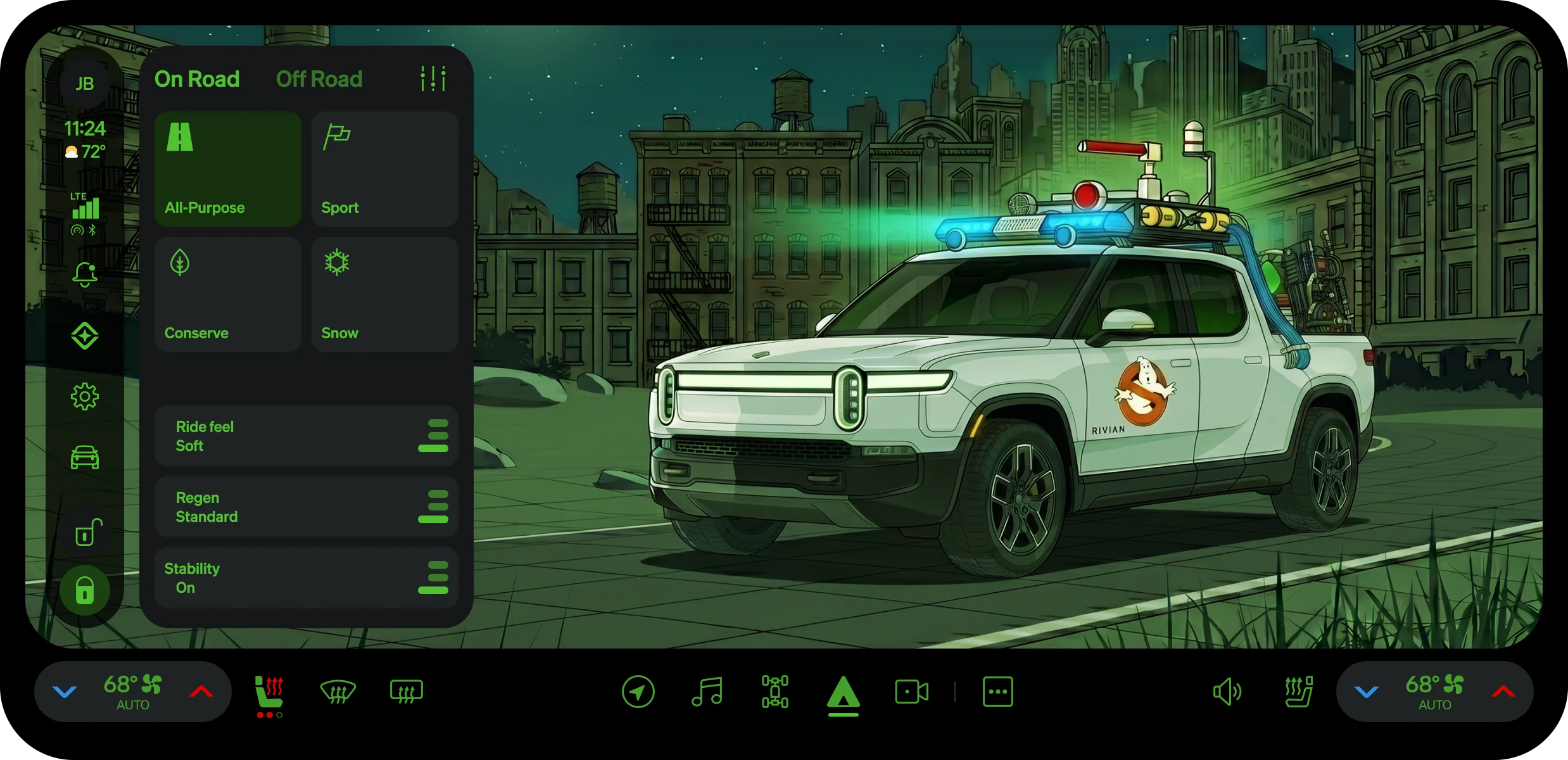
Bedrock
Ownership
One system, on the road
The work we delivered at Rivian is on the road. I own it, and I stand behind it.
Grateful it landed. Owners noticed the effort, and no file can hold that part of the job.
Loyalty for the adventure ahead. The work now lives with the people driving it. From our ownership to theirs.
0 to 10000000
Playbook
Forty-seven guidelines, consolidated to ten.
01 · Safety
Glanceability
Less is More — prioritize essential information to minimize eyes-off-road time.
02 · Safety
3-tap rule
Ensure critical functions are never more than three levels deep.
03 · Safety
Reachability
Keep frequent actions inside the belted driver’s one-hand envelope — not the far edge of a wide screen.
04 · Components
64px touch floor
Every interactive target is at least 64 px, and the smallest button is 80 px, for accuracy in motion.
05 · White label
Token mapping
Explicitly define brandable elements (color, type) vs. locked safety parameters (semantic reds, touch target sizes).
06 · Safety
State awareness
Communicate when and why features are disabled based on vehicle speed or driving state.
07 · Interaction
Multi-sensory confirmation
Provide auditory or haptic feedback to reduce visual dependency.
08 · Components
State logic
Differentiate Default, Active, and Disabled states.
09 · Hardware
Global adaptability
Ensure the architecture supports left- and right-hand drive mirroring.
10 · Edge cases
Thermal budgeting
Limit GPU-heavy effects (blurs, 3D) to prevent processor overheating.
Brand layer
Every alias points down a tier.
A new brand edits the bottom, and nothing above needs to know.
-
App Library feature
766 component variants156 components 123 component sets, 33 single components
built on
-
Component tokens
503 color tokens23 sizing tokens Small, Medium, Large
892 aliases
-
Semantic tokens
313 color roles87 dimensions spacers, radii, CID and FID screens100 type tokens four of them are font families
420 aliases
-
Primitives
343 raw values
Two doors, every role follows
Color
- #3064D0 RVT Light and RVT Dark
- Primitive
color/ultramarine/ 50 - Semantic
roles/accent/ default - Component
comp/button/ accent/ default - ButtonType = Accent
Type
- VW Head CarUI · VW Text CarUI Head for display, heading and digits; Text for body and labels
- Semantic
display/family heading/family text/family digit/family - Text styles24
Pick a brand. Twenty-two values change; the components don’t.
Buttons by size
Switch, slider and tags
1:45-1:45
Buttons by state · press any button
Controls and input
Emphasis=Yes
Emphasis=No
Born to scale
960 variants, one pressed state.
TypeAccent
InverseFalse
StateDefault
SizeSmall
ShapeRectangle
AlignmentCenter
Variants1
48 variants, none of them a state.
Condition1-line
LeadingNone
TrailingNone
Rows1
HeaderOff
Variants1
Three requests, three layers
VW asked for a floating button, a gradient fill and a bolder accent label. Each landed in one layer, and all 960 variants took it at once.
Robustness
Four checks before done
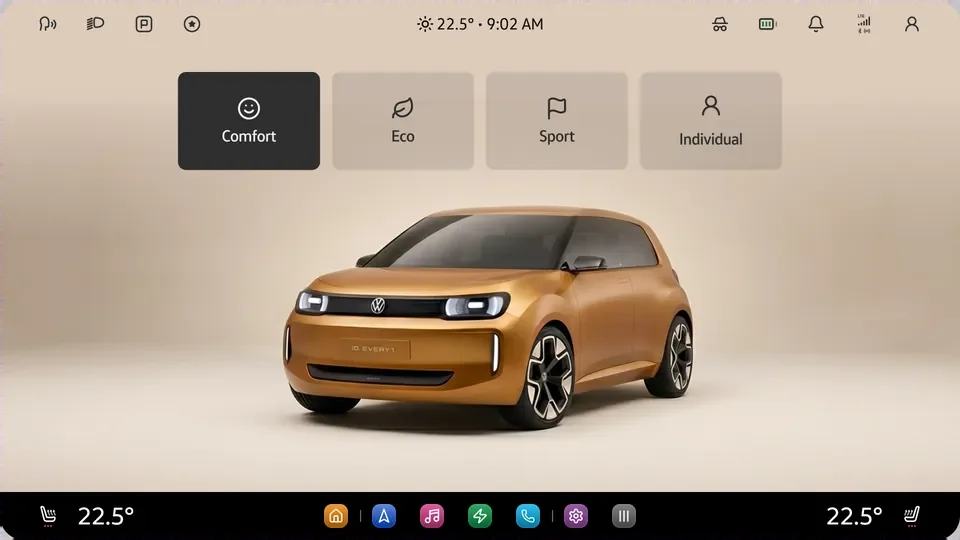
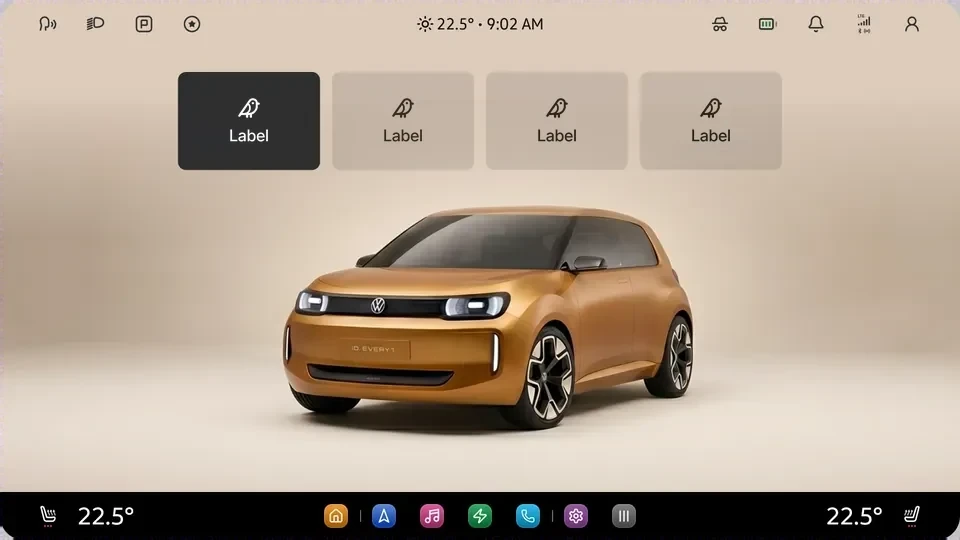
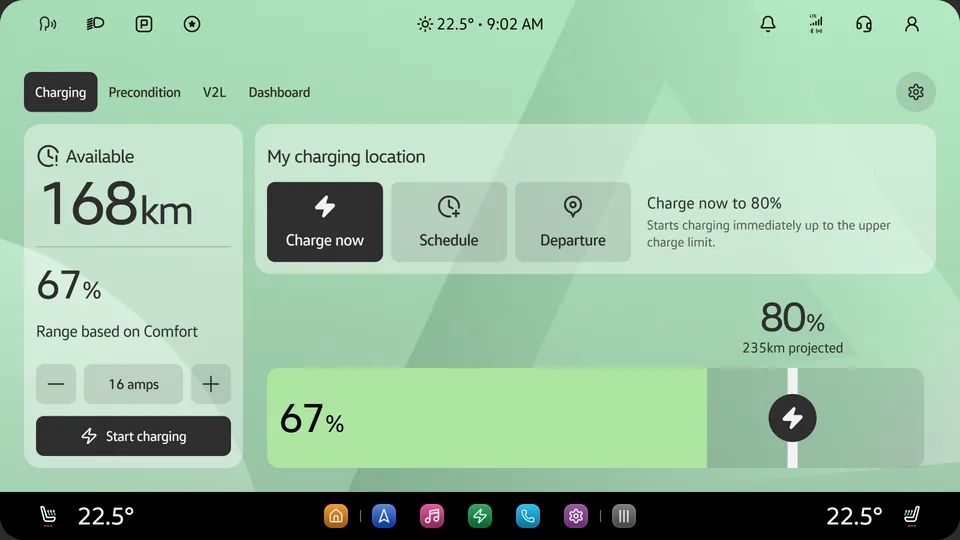
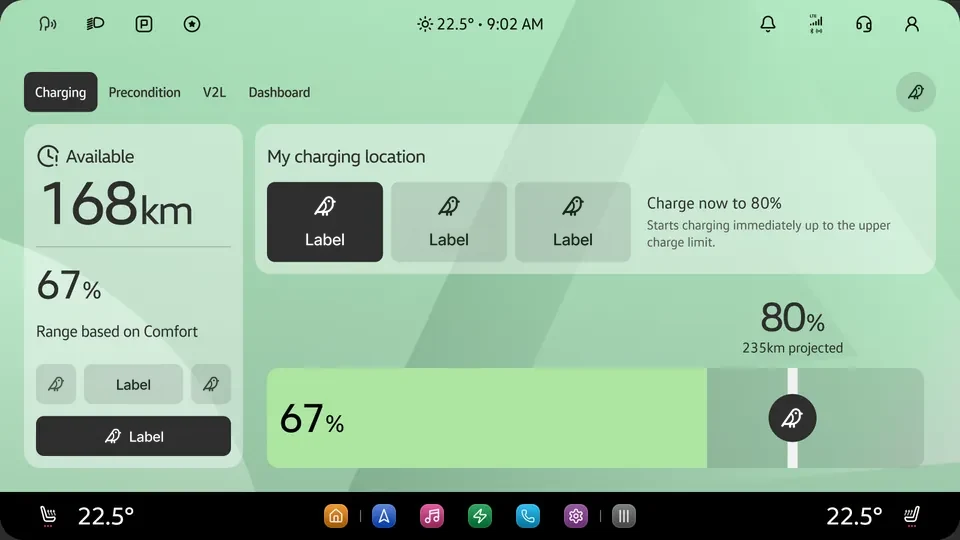
Assembled
Every chapter, one working app
Built from spec.
Four layers, one workflow
- SKILL.mdEvery task: how it ships, end to end.
- DESIGN.mdEvery screen: what good looks like.
- AGENTS.mdEvery agent: who does what, and when to ask.
- CLAUDE.mdOne agent: how every reply lands.
Three tools, one rule
A prototype for a question a frame can’t answer. A skill that writes a ruling down. A plugin that tells code what changed.
The risk. AI makes plausible content cheap. In a design system, a plausible value that isn’t the documented one is a defect that looks finished.
The rule. Nothing ships unless it is read from a source, labeled as inference or asked about. The design calibration skill makes that a gate, not a habit.
The calls stay mine. A judgment call is flagged, never guessed, and anything destructive runs dry first.
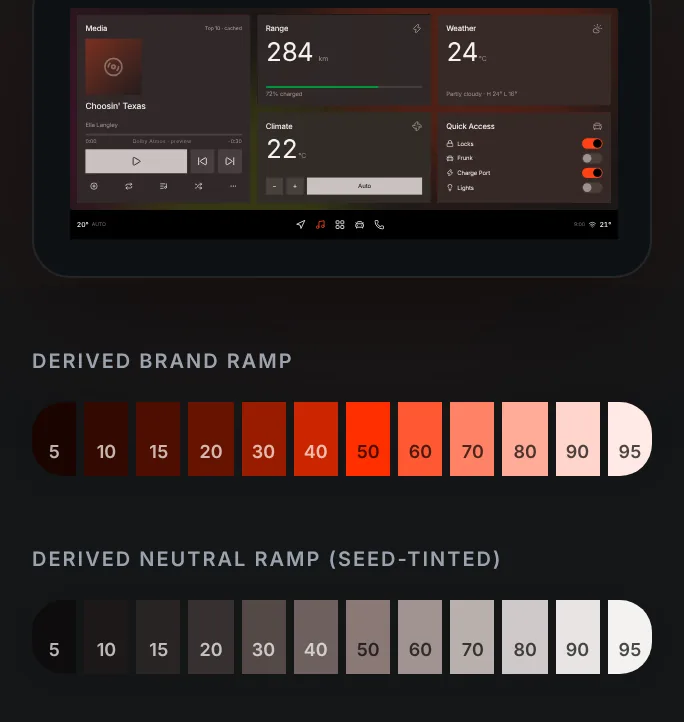
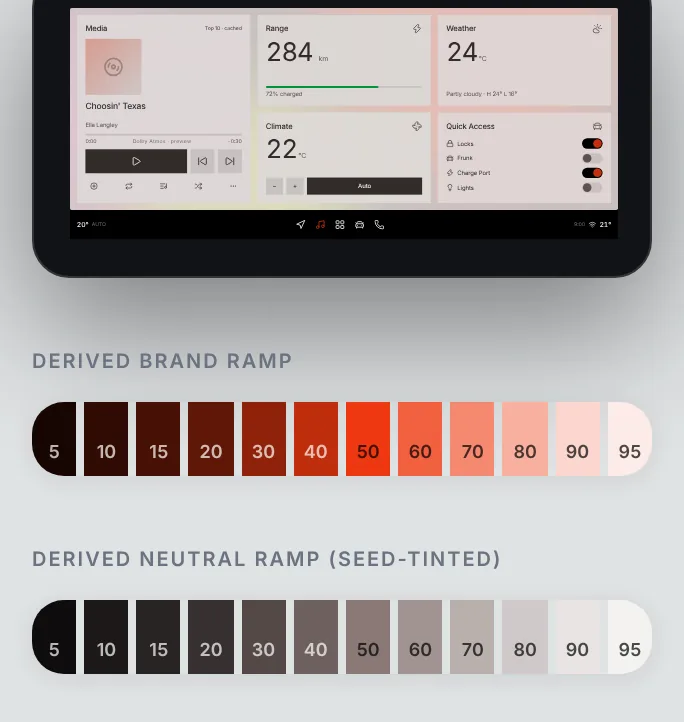
Two themes, zero inversions
Light and dark are parallel families, not one flipped. Atlas shows it live.
What it does. Describe a mood or a scene; Claude picks one brand accent and the RVT roles re-derive around it. Presets for Rivian, VW ID.1, Audi and Scout, with a local fallback offline.
Peers, not mirrors. Flip the theme and nothing inverts: same roles, different families. The alias layer re-points and every surface follows.
One brand, end to end. Pick one, then export the JSON back into the token chain. A prototype answers a question once; a skill makes the answer stick.
One desk for every token request
A skill is a rule written down, so nobody has to remember it. Meet bedrock-helpdesk, Bedrock’s token desk: add, change, rename or remove a Vehicle Semantics token, and see where it stands.
Why it exists. A request gets checked before anyone spends judgment on it: bedrock-helpdesk checks it against the live library and hands the approver a change that is ready to apply.
It has a partner. The helpdesk applies the change; the plugin in the next chapter tells code it happened.
One request, start to finish
6
01 · Requester
Ask
Pick add, change, rename or remove, then answer only that type’s questions. Every value has to be a Bedrock primitive, never a raw hex.
02 · Helpdesk
Check
Four checks against the live library. Anything the helpdesk couldn’t read is marked unchecked, never passed.
03 · Helpdesk
File
One record, one request ID. A missing field reads “not provided”; the helpdesk fills in nothing.
04 · Approver
Decide
The helpdesk flags the semantic fit and any near-duplicate, with one recommendation. Whether the token should exist is the approver’s call.
05 · Helpdesk
Dry run, then apply
The exact change as a table first. Nothing is applied without an explicit yes for that request, and destructive steps come last.
06 · Plugin
Verify at publish
The helpdesk reports “applied, not verified.” The proof is Variable changelog’s diff at publish, never the session that made the change.
One request, two tools
A token change has three moments: someone asks, someone applies, code finds out. The first two belong to bedrock-helpdesk, the third to Variable changelog, and one request ID runs through all three.
Why Variable changelog exists. Engineering reads tokens from GitLab, not Figma. The plugin diffs the live variables against that file and writes the changelog, merge request and Slack post from one diff, so no library change ships without code hearing about it.
Where they meet. The helpdesk writes the request ID into the variable’s description, and the plugin reads it back. The ID prefills the release notes, and a rename lands under Deprecated instead of reading as a silent edit.
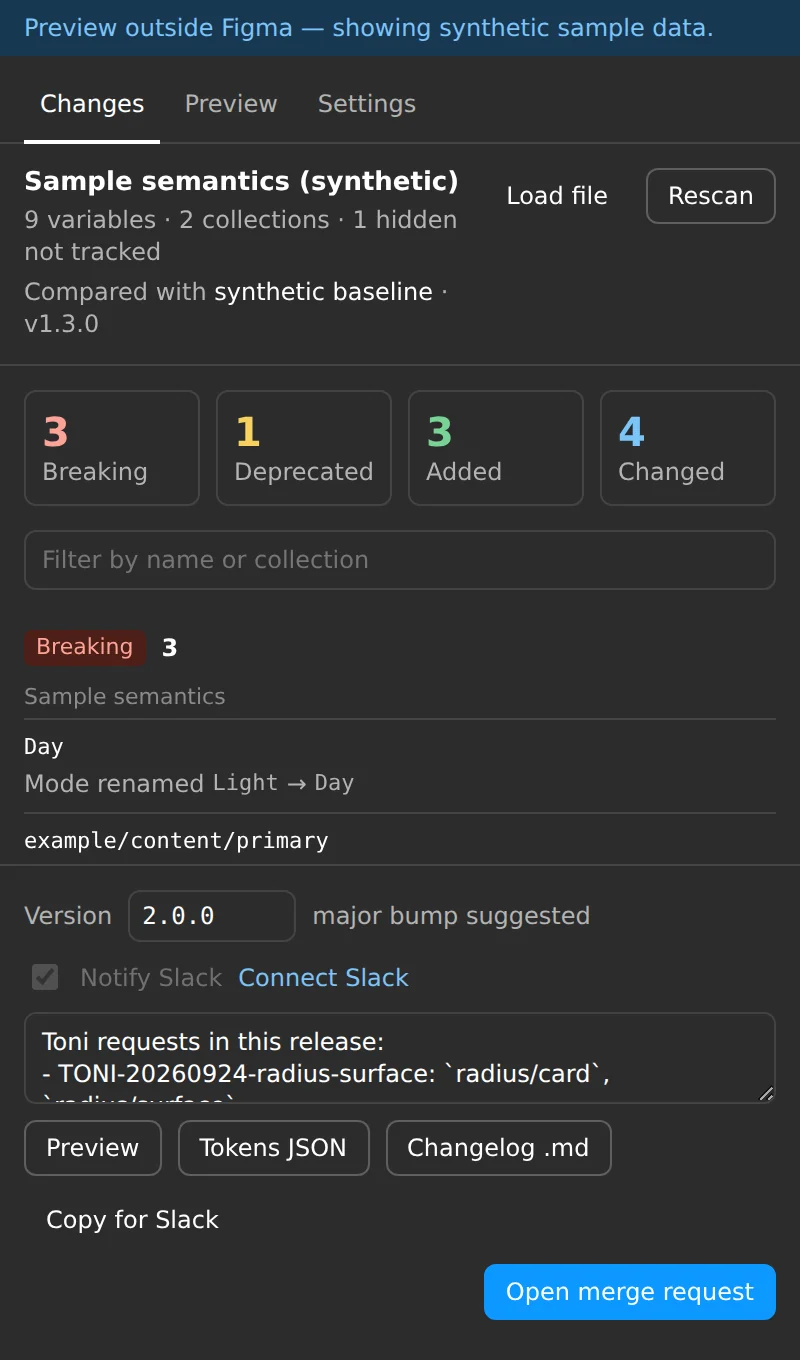
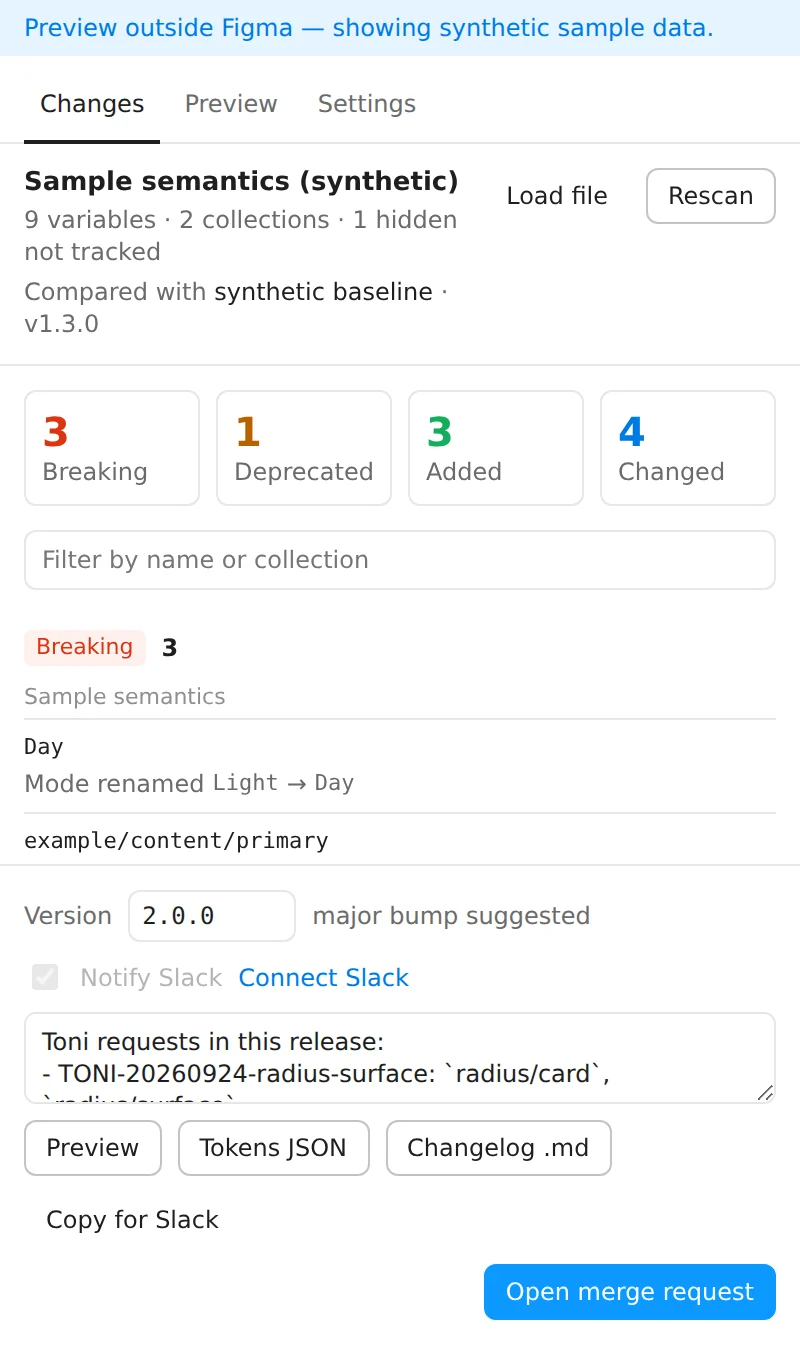
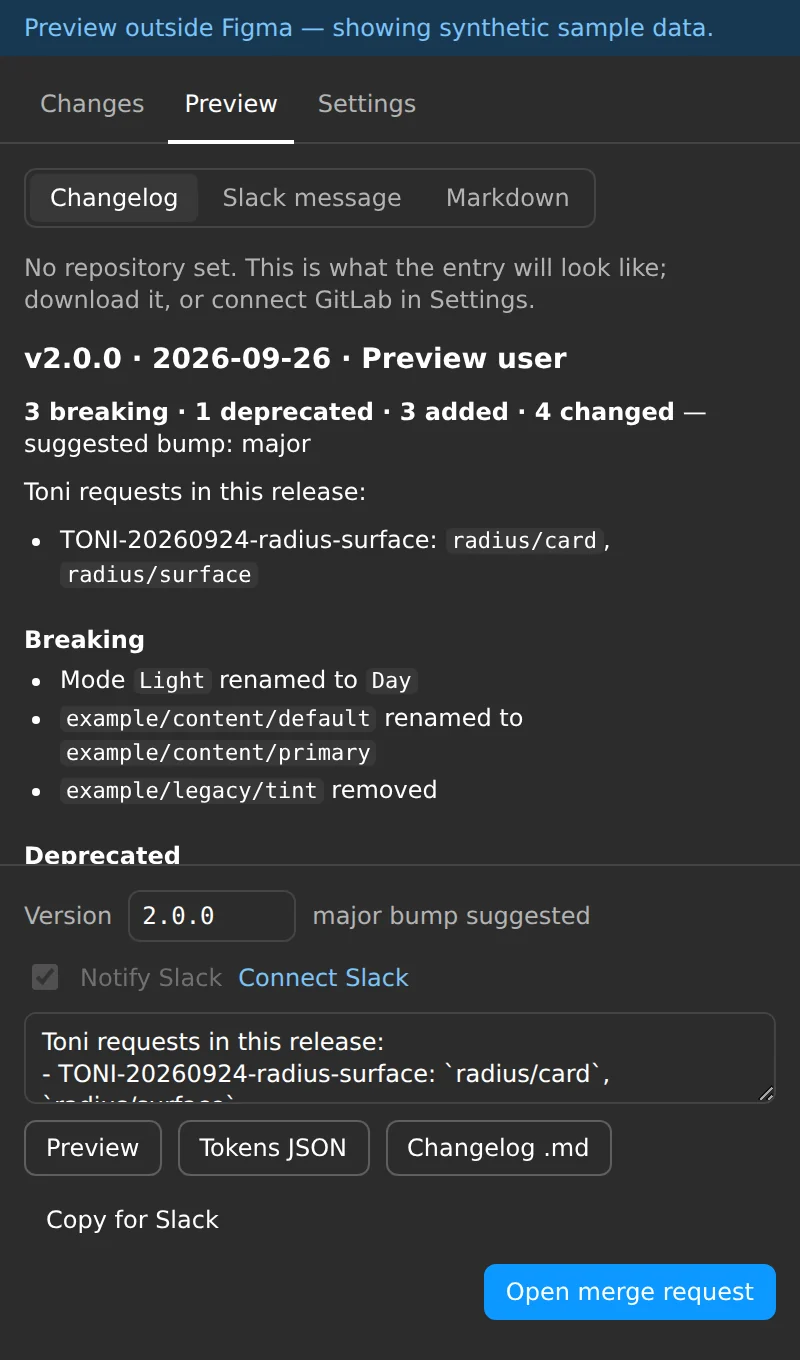
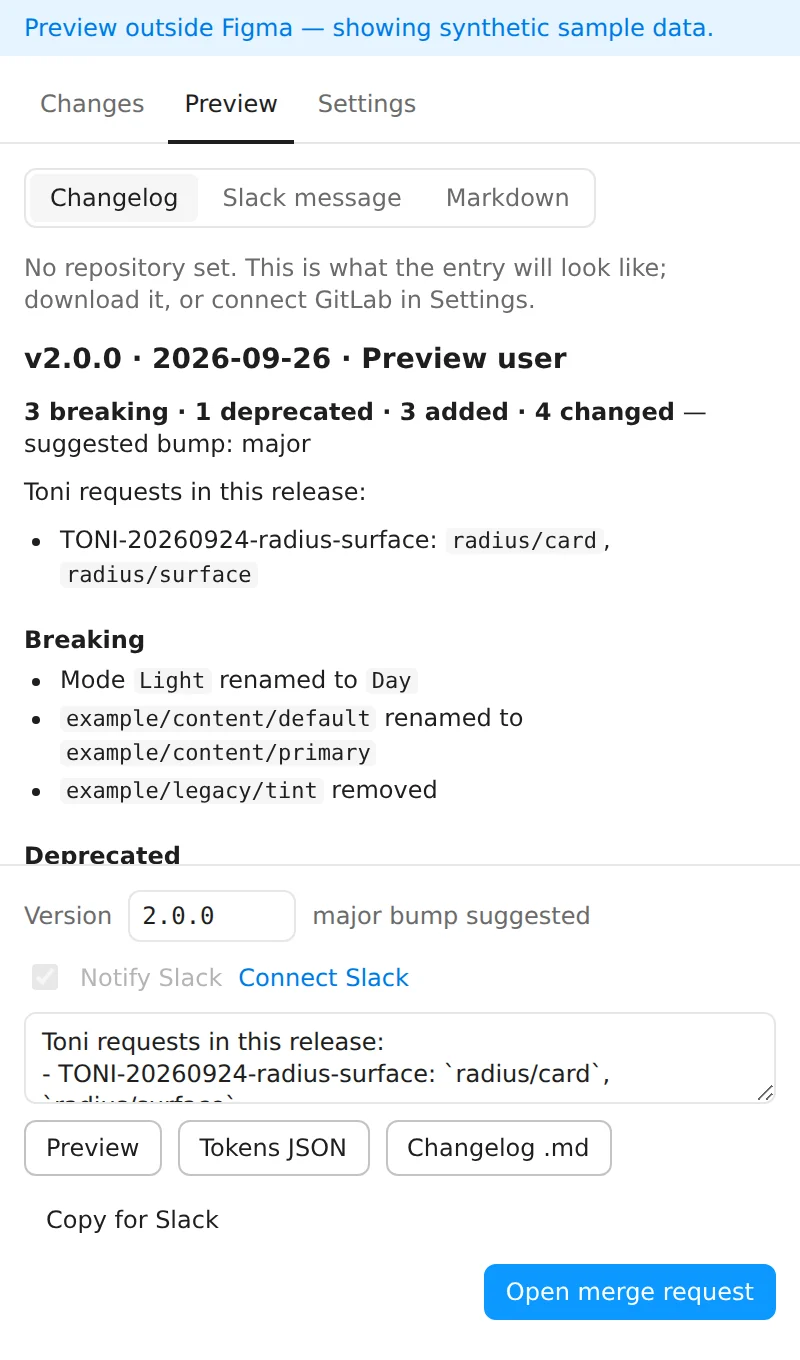
CHANGELOG.md, with the rename filed under Deprecated.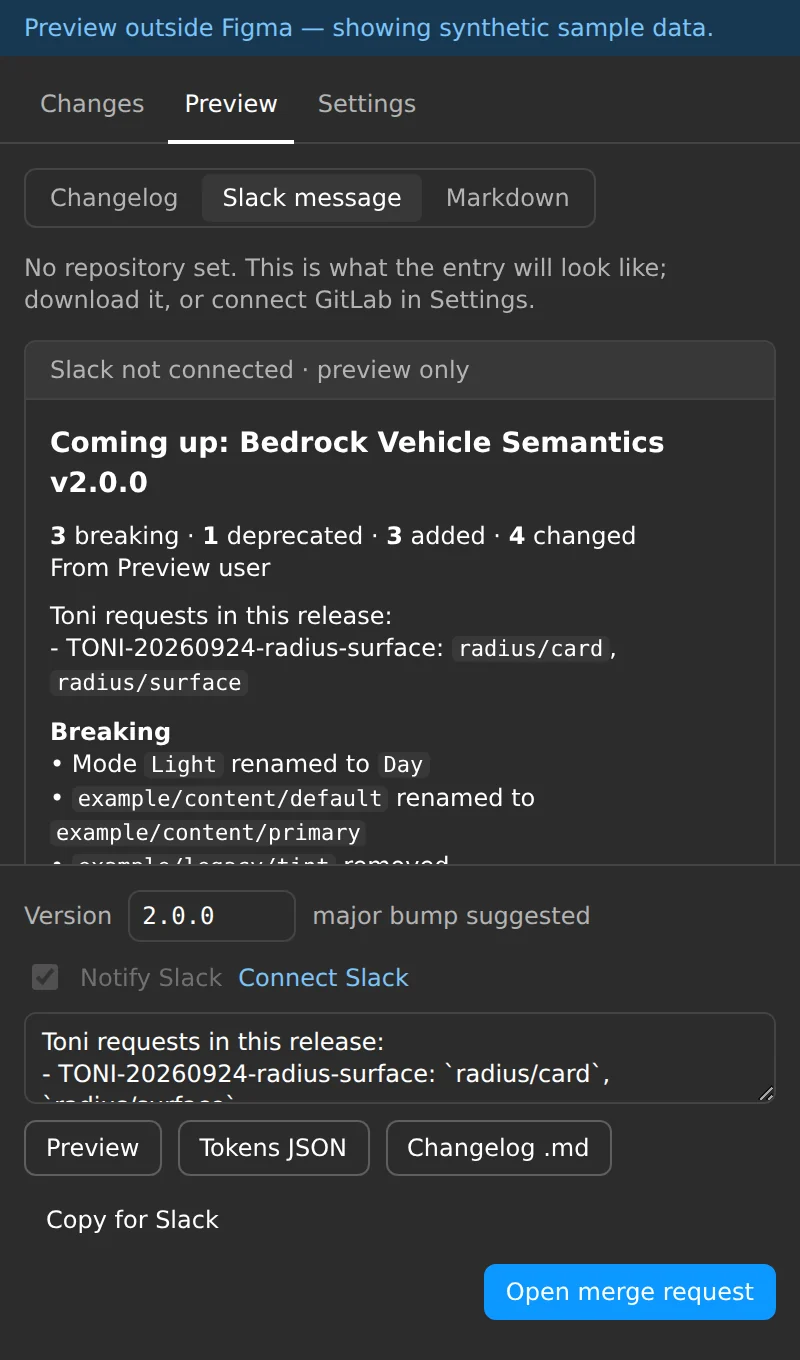
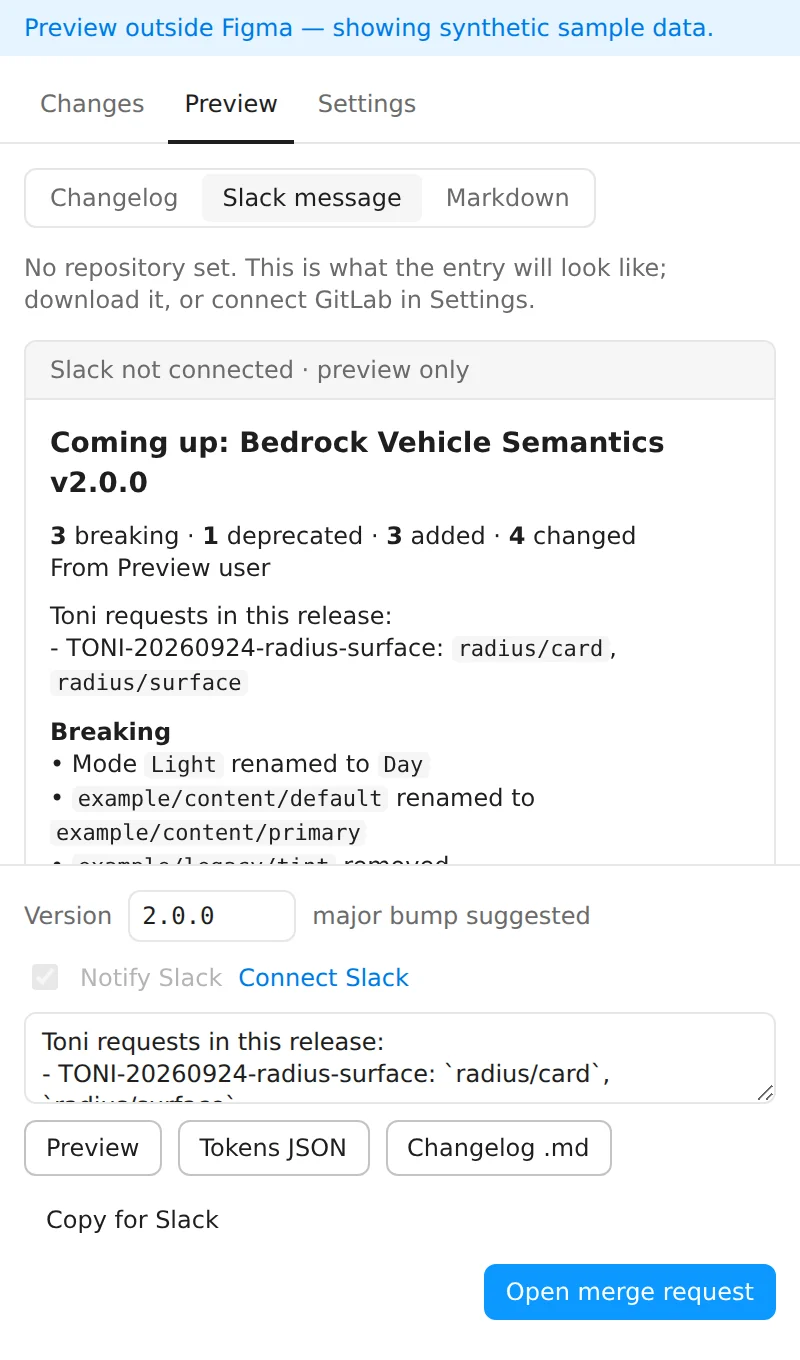
One plugin, two halves
Variable changelog tracks every variable change in a Figma library, keeps a DTCG tokens file current in GitLab and writes the changelog for you. A plugin only runs while someone has it open, so a CI job covers the rest.
Variable changelog 1.2
6
01 · Author time
The plugin
Reads variables live, diffs them against main and shows Breaking, Added and Changed. Add notes, pick the version, open the merge request.
02 · Automatic
The CI job
Runs on library publish or on a schedule and keeps one open merge request current. It skips any sync the plugin already made.
03 · Identity
Matched by ID
Variables are matched by Figma variable ID, so a rename reads as a rename, not a removal plus an addition.
04 · Severity
Judged from code
Breaking means a name code references stops existing: major. Added is minor, a changed value is patch. The bump is a suggestion you can edit.
05 · Output
DTCG tokens
The default mode is the value and every mode is kept alongside it, so the file doubles as the baseline for the next diff.
06 · Sharing
Slack by hand
Copy for Slack puts a formatted update on the clipboard. Posting automatically needs an admin-approved webhook, so it’s manual by design.
One core, two callers. The plugin and the CI job share one classifier, so a change is judged the same wherever it’s caught. It’s built for Bedrock only and in use there; RVT keeps its own tokens and doesn’t go through it.
This page runs on the same rule. Geeky Stats reads the site’s tokens, components and weight from the live page; no number is typed by hand.